
Research & Clinical Trials
Research & Clinical Trials · Metabolomics

Metabolomics

Profiling metabolism with the depth each study requires

We combine ¹H-NMR metabolic profiles and, when the study requires it, targeted analyses to characterise the metabolic phenotype, explore mechanisms and study biological responses in different matrices.

A strategy matched to the question, the matrix and the study design

Talk to the team
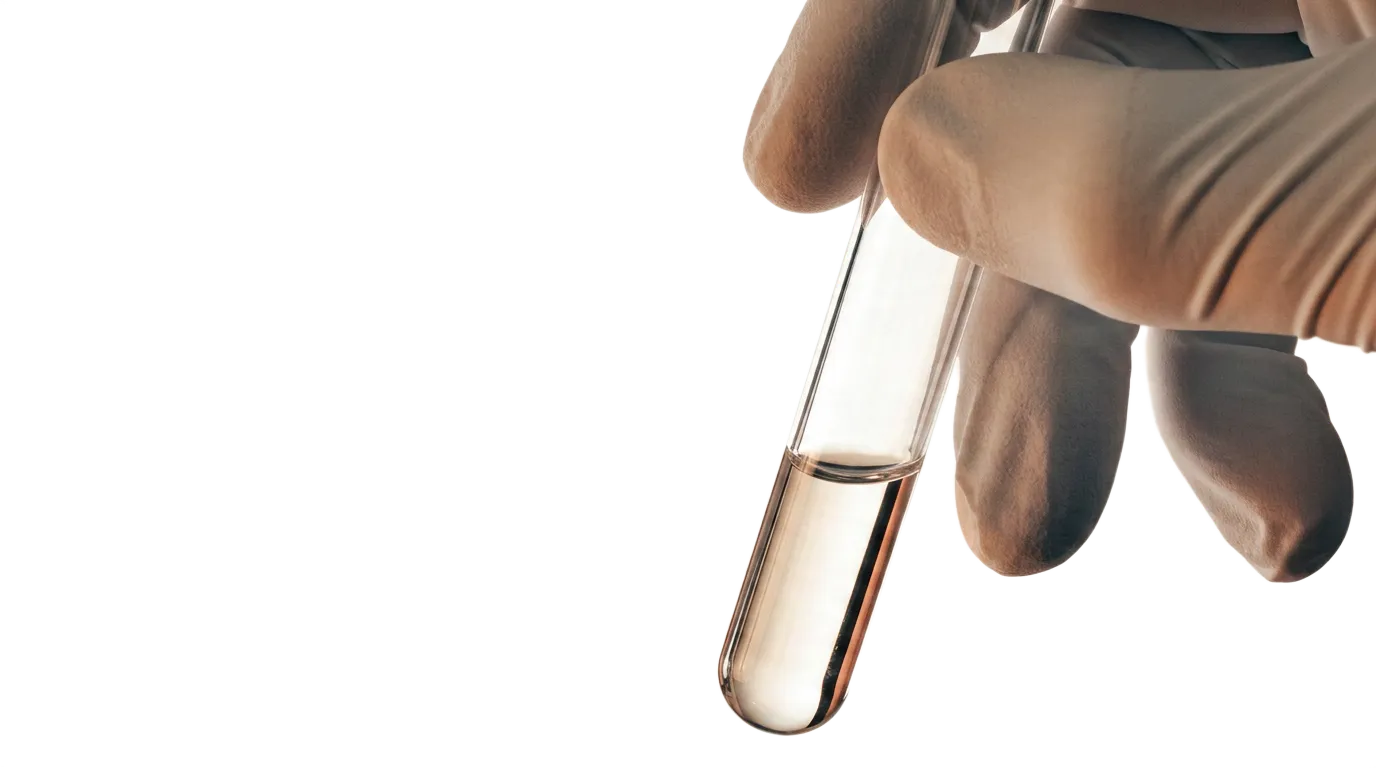
NMR tube with a sample prepared for metabolomic analysis
Research questions

What metabolomics can reveal

Metabolomics offers a functional readout of the organism: it is the layer of information closest to the phenotype. Below is a representative selection of the areas in which we apply it.

  1. Mechanisms

    Which metabolic processes and pathways are altered?

    Explores differences between conditions, groups or time points to locate patterns and pathways related to the phenomenon under study.

    Where it applies
    • Cardiometabolism Linking metabolic profiles with risk, mechanisms and progression
    • Liver and MASLD Observing changes related to function and progression
    • Inflammation and immunity Relating metabolism to the systemic response
    • Oncology Exploring mechanisms, heterogeneity and treatment response
    • Neurodegeneration Linking metabolic changes with progression and phenotype
  2. Biomarkers

    Can we identify distinct signals, candidates or profiles?

    Helps generate candidates and signatures that may later require targeted validation, replication and evaluation in new cohorts.

    Where it applies
    • Obesity and diabetes Studying metabolic diversity and response
    • Ageing and longevity Studying resilience and metabolic trajectories
  3. Response

    How does metabolism change with a treatment or intervention?

    Compares time points, response groups or trajectories to study changes associated with an intervention.

    Where it applies
    • Nutrition and interventions Characterising change after an intervention
  4. Stratification and integration

    Can we distinguish phenotypes and connect them with other data?

    Metabolic profiles can be analysed together with clinical, biochemical or other omics variables to broaden the context.

    Where it applies
    • Multi-omics integration Connecting the metabolic phenotype with other layers
  5. Microbiota–host

    How do microbial metabolism and the host response relate?

    The joint analysis of microbial and host metabolites makes it possible to study interactions relevant to nutrition, inflammation and disease.

    Where it applies
    • Microbiota–host Studying the interaction between microbial and human metabolism
    • Disease Changes in the faecal metabolome across conditions
    • Treatment response Microbial metabolites and response to interventions or therapies
A readout with a purpose

It is not about accumulating more data, but about obtaining the right readout to answer the question.

The scope of each study is defined by the biological question, the available matrix and analytical feasibility.

How the service is structured

Two decisions that define the approach

The strategy defines what we need to observe. The technology determines how we generate the information. Both decisions are combined according to the question, the matrix and the study design.

Analytical strategy

Broad defined panel

Global metabolic profile

For exploratory studies aimed at characterising the phenotype, comparing groups, generating hypotheses or identifying candidate pathways and signals. By ¹H-NMR we simultaneously quantify a defined panel of lipoproteins, glycoproteins, low-molecular-weight metabolites and lipid families, in absolute concentrations comparable across studies and over time.

  • Broad characterisation of the metabolic profile
  • Comparison between groups or time points
  • Exploration of patterns and pathways
  • Generation of hypotheses and candidates

Focused approach

Targeted metabolomic analysis

For studies focused on specific metabolites or pathways, with a defined mechanistic question or in a validation phase.

  • Short-chain fatty acids
  • NAD and tryptophan pathways
  • Specific metabolite families
  • Project-specific panels

Analytical technology

Biosfer Core

¹H-NMR

Nuclear magnetic resonance is Biosfer’s analytical core: an in-house platform that generates quantitative, reproducible metabolic profiles.

  • Standardised preparation and acquisition
  • Global profile and reproducible quantification
  • Processing, quality control and visualisation
  • Statistical analysis and interpretation
Complementary platform

Mass spectrometry

When the question requires metabolites outside the NMR panel, we coordinate mass spectrometry with partner platforms.

  • Complementary analytical coverage
  • Selection according to the question and matrix
  • Results combined with NMR data

The technical, scientific and coordination scope is defined explicitly for each project.

Explore by matrix

What we can characterise in each sample

Each matrix offers a different biological window and requires its own pre-analytical conditions. Select a sample to see the indicative scope.

Serum and plasma

Serum and plasma

A systemic view of the metabolic phenotype

Characterises lipoprotein, inflammatory and metabolic profiles and their relationship with risk, mechanisms and response.

Sample required
250 µL for human samples · 50 µL for animal models
Pre-analytical handling
Recommended storage at −80 °C

Representative families and analytes

Lipoprotein profile
  • total cholesterol, cholesterol by fraction (LDL-C, HDL-C, VLDL-C, IDL-C)
  • total triglycerides, triglycerides by fraction (VLDL-TG, LDL-TG, HDL-TG, IDL-TG)
  • particle number by fraction (VLDL-P, LDL-P, HDL-P) and by size subclass (large, medium, small)
  • mean particle diameter (LDL-Z, HDL-Z, VLDL-Z)
Inflammation
  • acute-phase glycoproteins (GlycA, GlycB, GlycF)
  • height/width ratio (H/W GlycA, H/W GlycB)
Amino acids
  • branched-chain amino acids (valine, leucine, isoleucine)
  • other amino acids (alanine, glutamine, glutamate, threonine, tyrosine, histidine, glycine)
Energy and renal function
  • energy metabolism (glucose, lactate, pyruvate)
  • ketone bodies (3-hydroxybutyrate, acetone)
  • other energy metabolites (acetate, glycerol)
  • muscle and renal markers (creatine, creatinine)
Lipids and fatty acids
  • phospholipids (LPC, PC, total PL)
  • polyunsaturated fatty acids (ARA+EPA, linoleic acid, DHA, omega-3, omega-6/7)
  • oleic acid (omega-9)
  • saturated fatty acids (SFA)
  • cholesterol and structural sphingolipids (EC, FC, SM)
Download the serum and plasma panel

Urine

Urine

Metabolism, excretion and signals related to diet and microbiota

Provides complementary information on renal function, energy metabolism and compounds linked to exposure, diet and microbial activity.

Sample required
Indicative volume above 300 µL
Pre-analytical handling
Recommended storage at −80 °C

Representative families and analytes

Renal function
  • Creatine
  • Creatinine
  • Urea
Amino acids
  • Alanine
  • Glycine
  • Histidine and other amino acids
Microbiota
  • Dimethylamine
  • TMAO
  • Selected microbial metabolites
Energy and diet
  • Citrate, glucose and lactate
  • Betaine and mannitol
  • 3-methylhistidine
Other pathways
  • Ketone bodies
  • Nicotinamide
  • Pyrimidine metabolism
Download the urine panel

Faeces

Faeces

A functional approach to the gut ecosystem

Studies products of microbial and host metabolism in the context of nutrition, inflammation and microbiota.

Sample required
15–20 mg of dry sample
Pre-analytical handling
Recommended storage at −80 °C

Representative families and analytes

Short-chain fatty acids
  • Acetate
  • Butyrate and propionate
  • Valerate and isobutyrate
Amino acids
  • Alanine
  • Leucine and isoleucine
  • Valine and other amino acids
Microbial metabolism
  • Fermentation products
  • Aromatic metabolites
  • Microbiota–host signals
Energy and nucleotides
  • Energy intermediates
  • Nucleotide metabolism
  • Other low-molecular-weight metabolites
Lipid families
  • Fatty acids
  • Degree of saturation
  • Optional lipid panel
Download the faeces panel

Tissues and cell models

Tissues and cell models

Metabolism in the context of the experimental model

We adapt preparation and analysis to tissues, cells and culture media to study metabolic changes close to the experimental system.

Sample required
Tissue: 25–50 mg · Cells: 5–10 million · Medium: 300 µL
Pre-analytical handling
Preparation and storage are reviewed before the study

Representative families and analytes

Metabolic profile
  • Low-molecular-weight metabolites
  • Energy intermediates
  • Amino acids
Biological pathways
  • Energy metabolism
  • Stress and cellular response
  • Pathways matched to the question
Lipids
  • Lipid families
  • Fatty acids
  • Optional panel depending on the model
Experimental design
  • Comparison between conditions
  • Response to treatments
  • Relationship with model phenotypes
Download the full portfolio (cells and tissues)

Other matrices

Other matrices

Analytical feasibility for less conventional samples

We have worked with matrices such as breast milk, cerebrospinal fluid and thrombi. Each case requires a specific assessment.

Sample required
Minimum amount defined after the feasibility assessment
Pre-analytical handling
Pre-analytical protocol agreed for each matrix

Representative families and analytes

Matrices studied
  • Breast milk
  • Cerebrospinal fluid
  • Thrombi
Prior assessment
  • Available volume or mass
  • Matrix interferences
  • Stability and storage
Scope
  • Pilot study
  • Methodological development
  • Panel defined by feasibility
Download the full portfolio (includes breast milk)

The families and analytes shown are representative. The final panel depends on the species, the quality and quantity of the sample, the platform and the study objectives.

Frequently asked questions

Before defining the approach

01

When should I choose a global profile or a targeted analysis?

The global profile suits studies that need to explore patterns, generate hypotheses or compare phenotypes. Targeted analysis fits better when pathways, metabolites or candidates are already defined. Both can be part of the same study.

02

Which biological matrices can be analysed?

We have analysed the metabolome of serum and plasma, urine, faeces, tissues (heart and liver, among others), cells and culture media, breast milk, cerebrospinal fluid or vaginal fluid. For more specific matrices we first assess feasibility. In every case we review the available volume and pre-analytical conditions before confirming the scope.

03

Can it be combined with clinical data or other omics?

Yes. Metabolic profiles can be analysed together with clinical, biochemical, genomic, microbiome or other data, provided the design and data quality allow it.

04

What do I receive, and when?

A table of concentrations by sample and analyte, the quality control of the batch and, if the project includes it, the statistical analysis, figures and interpretation. The timeline depends on the number of samples and the matrix; we specify it in the proposal.

05

At which stages of the study can Biosfer take part?

We can take on a specific analytical phase or the analytical strategy, analysis and interpretation. Before the study starts we define Biosfer’s role, the sample and data flow, the controls and the deliverables.

Your metabolomics study

Assess the feasibility of your metabolomics study

Tell us the question, the design, the matrix and the number of samples. We will confirm feasibility, minimum volume, panel and an indicative timeline.

Send design and samples