
Research & Clinical Trials
Research & Clinical Trials · Biomarker analysis

Biomarker analysis

Measuring relevant signals with the context each study requires

Together with you we define targeted assays and tailored panels to quantify biological processes, study response and strengthen translational interpretation.

The right panel for your question, your sample and your study

Talk to the team
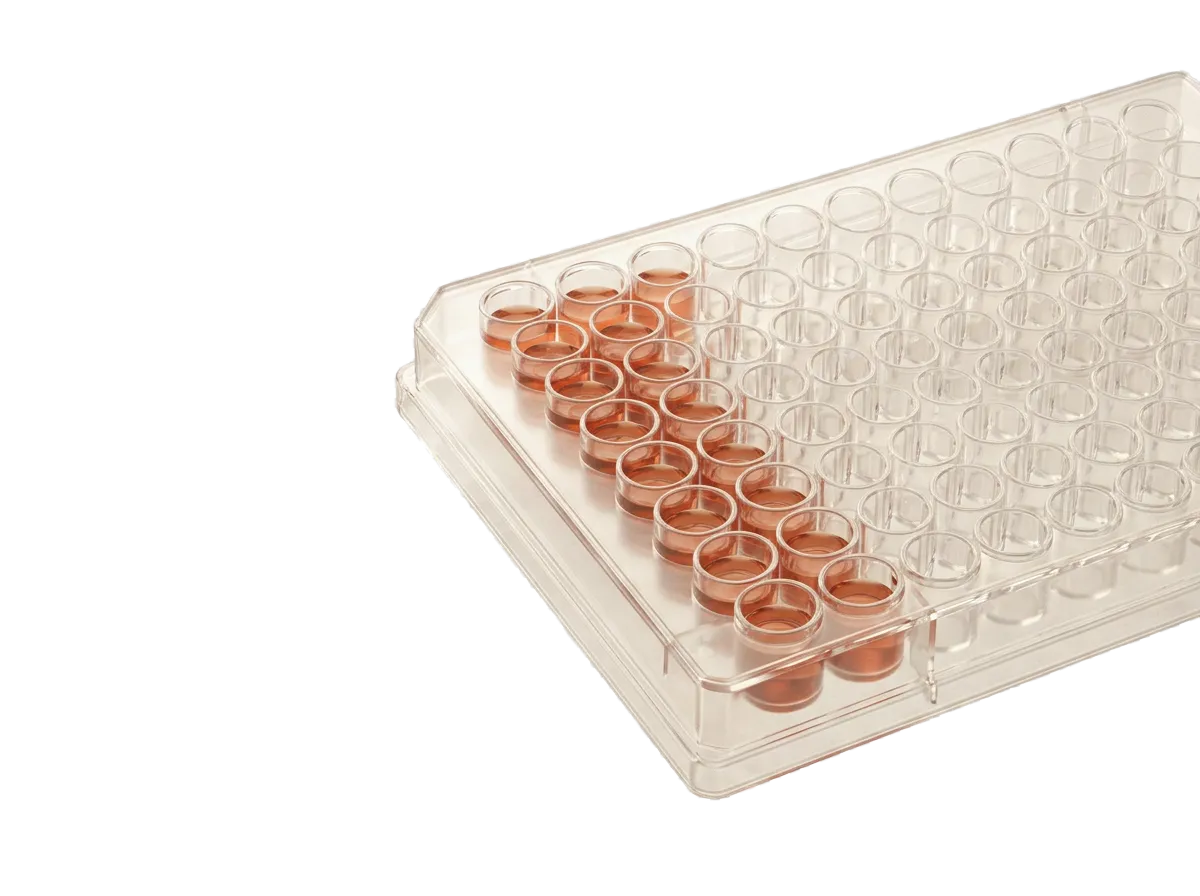
Microassay plate with samples in terracotta tones
Research questions

From hypothesis to a measurable signal

We select biomarkers and combinations that connect the hypothesis with a quantifiable, traceable and interpretable measurement.

  1. Mechanisms

    Which biological processes show a measurable signal?

    Targeted quantification helps test hypotheses on metabolism, inflammation, organ function and other processes linked to the phenomenon under study.

    Where it applies
    • Cardiometabolism Lipid and glucose metabolism and cardiovascular risk
    • Liver and MASLD Liver function, injury and metabolic context
    • Inflammation and immunity Systemic response, acute phase and immune regulation
  2. Response

    How does a signal change with a treatment or intervention?

    Longitudinal measurements make it possible to study baseline variation, change over time and differences in response between groups or profiles.

    Where it applies
    • Trials and interventions Response monitoring and exploratory endpoints
    • Nutrition and lifestyle Changes associated with an intervention
  3. Stratification

    Can we distinguish profiles within a heterogeneous population?

    A coherent panel can help characterise subgroups, trajectories or degrees of involvement, without turning a single marker into a conclusion.

    Where it applies
    • Progression and prognosis Comparing states, trajectories and defined groups
    • Healthy ageing Studying resilience and biological change
  4. Validation

    Can we test candidates obtained in an exploratory phase?

    Targeted assays make it possible to evaluate candidates and signatures in new samples, always with controls, criteria and analyses matched to the validation objective.

    Where it applies
    • Translational research Connecting molecular findings with relevant variables
    • Microbiota–host Testing signals of inflammation, barrier function and metabolism

The contexts shown illustrate possible applications. Each panel is defined by the objective, the matrix, the experimental design and analytical feasibility.

How the service is structured

From the marker of interest to an interpretable measurement

The strategy defines which signals we need to measure. The technology determines how to obtain them with the right sensitivity, range and controls. The right combination depends on the question, the matrix and the study design.

  1. Measurement strategy

    Defined targets

    Targeted assays

    For studies with previously defined biomarkers, hypotheses or endpoints that require specific, traceable quantification.

    • Selection by objective and expected range
    • Controls and acceptance criteria
    • Comparison between groups or time points
    • Results ready to combine with other data
    Combined panel

    Study-specific panels

    For questions that need to combine complementary signals and obtain a more complete biological picture than a single analyte provides.

    • Combination of biomarker families
    • Adjusted to matrix, volume and design
    • Integration with clinical variables
    • Option to combine with metabolomics
  2. Analytical technology

    We work with different analytical technologies and select the most suitable one according to the analyte, the matrix, the expected range and the quality requirements of the study.

    Targeted quantification

    ELISA and immunoassays

    Targeted assays to quantify specific analytes (proteins, hormones, vitamins and other targets) in biomedical and translational research.

    • Assay selection and review
    • Curves, controls and replicates
    • Adapted quantification range
    • Project-specific panels
    Automated platform

    Immunoturbidimetry

    Reproducible measurement of selected biomarkers when the analyte, the range and the sample volume make this technology suitable.

    • Analytes in plasma and serum
    • Inflammatory and immunological markers
    • Processing of sample batches
    • Defined analytical controls
    Biochemical measurement

    Automated clinical biochemistry

    Enzymatic, colorimetric and other targeted measurements to characterise metabolism and organ function.

    • Glucose and lipid metabolism
    • Liver and renal function
    • Minerals and total protein
    Fractionation

    Ultracentrifugation and fractionation

    Isolation of lipoprotein fractions and extracellular vesicles for their specific characterisation and quantification.

    • Lipoprotein fractions (VLDL, LDL, HDL)
    • Extracellular vesicles
    • Biomarker quantification by fraction
    • Protocol adapted to sample volume and type
  3. Representative assays

    What we can measure

    We organise the assays by biological context to make them easier to explore. The final selection starts from the question, not from a closed catalogue.

    01CardiometabolicLipid and glucose metabolism and cardiovascular risk

    Targeted panels to study metabolic alterations, risk profiles and response in cohorts or interventions.

    Usual matrices
    Serum, plasma and whole blood depending on the analyte
    Technique
    Biochemistry, immunoturbidimetry or immunoassay

    Lipoproteins

    ApoB · ApoA-I · Lp(a) · Total cholesterol · HDL · LDL · Triglycerides · NEFAs

    Glucose metabolism

    Glucose · HbA1c · Complementary markers depending on the study

    Cardiovascular ELISA markers

    ApoC3 · oxLDL · PCSK9

    Fractionation and extracellular vesicles

    Isolation of lipoprotein fractions (VLDL/LDL/HDL) · Extracellular vesicles · ApoC3 quantified by fraction · Other quantifications by fraction depending on the study design

    Systemic context

    Proteins · Minerals · Selected biochemical variables

    02Inflammation and immunityInflammatory, immune and acute-phase response

    Assays selected to characterise the systemic response and its relationship with the phenotype or the intervention.

    Usual matrices
    Serum, plasma and other matrices after assessment
    Technique
    ELISA, immunoassay or immunoturbidimetry

    Inflammation

    C-reactive protein · Calprotectin · Ferritin

    Immunometabolic signalling

    IL-6 · MCP-1 · OSM · LIF

    Complement

    C3 · C4 · Other components depending on the question

    Immunity

    Immunoglobulins · Specific proteins · Tailored panels

    03Organ functionLiver and renal function and metabolic balance

    Targeted biochemistry to characterise mechanisms, safety, progression or response within the study design.

    Usual matrices
    Mainly serum, plasma or urine
    Technique
    Automated enzymatic and colorimetric methods

    Liver function

    AST · ALT · GGT · Bilirubin

    Renal function

    Creatinine · Urea · Uric acid

    General biochemistry

    Total protein · Calcium · Magnesium

    04Specialised ELISA biomarkersELISA assays for specific biological processes

    ELISA assays targeting processes that routine clinical biochemistry and inflammatory panels do not cover in detail.

    Usual matrices
    Serum and plasma depending on the analyte
    Technique
    Targeted ELISA, panel defined by the study

    Tissue and muscle remodelling

    ADAMTSL2 · FSTL1 · FABP3 · MSTN · GDF15

    Cellular metabolism and endocrine regulation

    ACY1 · APLN · GS

    Assays are confirmed after reviewing the objective, matrix, volume, expected range and quality requirements. We can assess other analytes and technically feasible combinations.

    Biomarker catalogueExplore families, biological processes, matrices and measurement techniquesView the full catalogue
Frequently asked questions

Before defining the panel

01

Which biomarkers can Biosfer measure?

We work with immunoassay biomarkers, clinical biochemistry and fractionation of lipoproteins and extracellular vesicles. For assays outside this catalogue, such as genomic or mass spectrometry panels, we coordinate with specialised providers. Availability depends on the analyte, the matrix, the expected range, the volume and the study requirements.

02

Can a project-specific panel be designed?

Yes. We select biomarkers and methods based on the biological question, the available evidence, the experimental design and technical feasibility. Scope, controls and deliverables are agreed before the study starts.

03

Can it be combined with metabolomics?

Yes. A targeted measurement can complement a metabolic profile, help interpret mechanisms or be used to evaluate candidates identified in an exploratory phase.

04

Can it be used in longitudinal studies or clinical trials?

It can support response monitoring, comparison between time points and exploratory endpoints when the panel, the sampling times and the analysis are properly defined in the protocol.

05

Can Biosfer support validation studies?

Yes. We can help select the technique, analyse new samples and combine the results. The validation strategy must be consistent with the intended use and the level of evidence required.

06

What volume do I need, and when will I receive the results?

The volume depends on the technique and the number of assays per sample; we specify it when defining the panel. The timeline depends on the number of samples and the assays involved; we set it out in the proposal, together with the controls and deliverables.

Your biomarker study

Define the panel for your study

Tell us the question, the available samples and the study design. We will propose the most suitable panel, technology and scope.

Send analytes and matrix