Research & Clinical Trials
Research & Clinical Trials · Biosfer Trials

Biosfer Trials

From study start-up to evidence report

Biosfer Trials provides flexible CRO services for clinical research, combining study coordination, centralized sample management, biostatistics and advanced data analysis.

Scientific and operational support at every stage of your study

Talk to the team
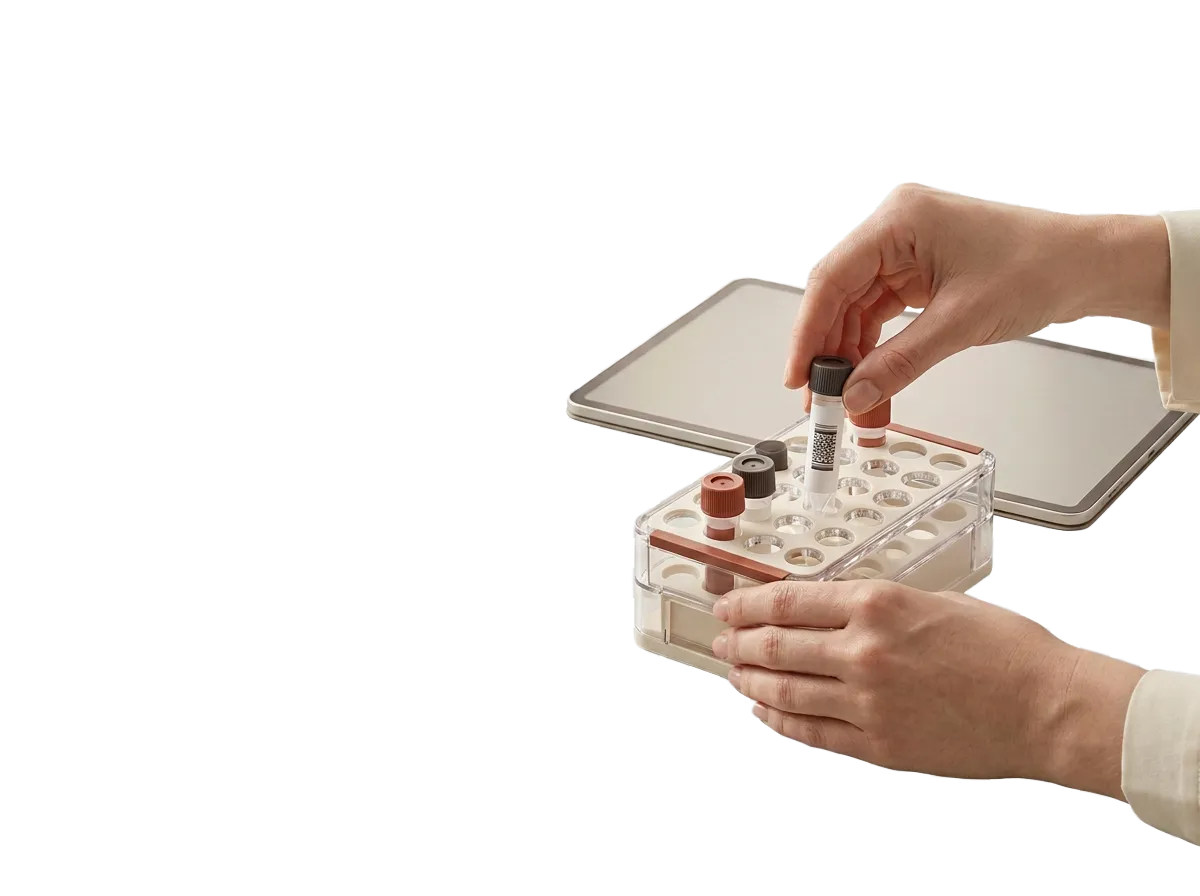
Professional coordinating identified samples and digital documentation for a biomedical study
Core service areas

Three areas that stay connected throughout the study

Clinical coordination, centralized sample handling and advanced data analysis are run by the same scientific team, avoiding fragmentation between laboratory, biostatistical and clinical work.

  1. Multicentre clinical studies

    How do sites, investigators and timelines stay aligned across centres?

    We coordinate principal investigators and participating centres, aligning study procedures, sample-collection requirements, timelines and deliverables throughout execution.

    Where it applies
    • Investigator-initiated studies Close interaction between clinicians, laboratory and data teams
    • Industry-collaborative studies Operational follow-up and reporting to investigators, partners and sponsors
  2. Integrated sample operations

    How are large sample volumes handled without losing traceability?

    Dedicated facilities for sample reception, controlled storage, aliquoting and pre-analytical preparation, with centralized tracking, high-throughput batch processing and analytical quality control.

    Where it applies
    • High-volume studies Large sample batches processed with traceability and reproducibility
    • Biomarker and omics components Standardized, scalable NMR workflows suitable for multicentre studies
  3. Data & biostatistics

    How do clinical and molecular data become interpretable results?

    Data curation and harmonisation across centres, statistical analysis, longitudinal and multivariable modelling, predictive modelling and validation, carried out by the team that also manages the samples.

    Where it applies
    • Data-analysis partner Biosfer can join a study as its data-analysis partner
    • Longitudinal designs Repeated measures and trajectories from baseline to endpoint

Depending on the study design and sponsor needs, the scope can cover the full workflow or specific workstreams.

See related publications
Integrated CRO workflow

One workflow from protocol to final report

Clinical operations, centralized sample handling and advanced data analysis are connected step by step, so each workstream hands over to the next within the same scientific team.

  1. Integrated execution

    Clinical + laboratory + data

    Four operational pillars

    Study coordination, sample operations, data analysis and scientific reporting are planned together from the start of the study.

    • Clinical coordination: sites, investigators, timelines
    • Sample operations: reception, tracking, QC
    • Data & biostatistics: analysis, modelling, validation
    • Scientific reporting: interpretation and dissemination

    Seven steps

    From study set-up to final reporting

    Sample metadata, analytical outputs and clinical datasets stay connected through reproducible, version-controlled workflows.

    • Study and protocol
    • Sites and investigators
    • Samples and clinical data
    • Central laboratory
    • Data integration and QC
    • Biostatistics and AI
    • Final reporting
  2. CRO service scope

    Nine workstreams, combined according to the study design and sponsor needs.

    01

    Study start-up & protocol support

    Scientific input to study start-up, protocol development and feasibility assessment.

    • Study objectives and endpoints
    • Biomarker strategy and sample requirements
    • Analytical plan and operational workflows
    • Preparation and review of study documentation
    02

    Site & investigator coordination

    Coordination of participating sites and principal investigators throughout study execution.

    • Site onboarding
    • Study communication
    • Alignment of procedures, timelines and deliverables
    • Operational follow-up across centres
    03

    Regulatory, ethics & quality

    Support for the ethics and regulatory requirements of the study.

    • Ethics committee (CEIm) documentation
    • GCP-aligned study processes
    • SOP implementation
    • Data protection and quality documentation
    04

    Central laboratory & sample operations

    Centralized management of clinical study samples in dedicated facilities.

    • Reception, controlled storage and aliquoting
    • Sample tracking
    • High-throughput batch processing
    • Analytical QC and traceable repeat-analysis workflows
    05

    Data management

    Study-specific clinical data management, from data-collection design to harmonised datasets.

    • Data-collection design
    • Data intake and integration
    • Cleaning and harmonisation across centres
    • Quality checks, queries and discrepancy resolution
    06

    Biostatistics

    Statistical analysis planning and execution, and scientific interpretation of study results.

    • Statistical analysis plan
    • Longitudinal, multivariable and survival analyses
    • Analysis populations and derived variables
    • Model validation
    07

    Advanced analytics & data science

    Advanced analysis of clinical and molecular data.

    • Biomarker discovery
    • Predictive modelling and machine learning
    • Multimodal data integration
    • Advanced visualisation
    08

    Clinical project management

    Study-level project management across clinical, laboratory and data activities.

    • Timeline and milestone tracking
    • Coordination of cross-functional workstreams
    • Risk and issue management
    • External-provider oversight and deliverable follow-up
    09

    Statistical reporting & scientific writing

    Preparation and interpretation of statistical and scientific study outputs.

    • Interim and final analyses
    • Results tables, figures and statistical reports
    • Study deliverables
    • Manuscripts and congress communications
  3. Biostatistics & data management

    Clinical data infrastructure

    Biosfer Teslab designs and develops its own digital tools to manage electronic clinical research data throughout the study lifecycle.

    01Data captureStudy-specific eCRF/CRF design and structured data collection

    Data collection is designed for each study, so clinical variables arrive structured and linked to sample metadata and analytical outputs.

    Designed
    eCRF/CRF and data-collection structure for each study
    Connected
    Clinical variables linked to sample metadata and analytical outputs

    Includes

    eCRF/CRF design · Structured data collection · Data intake from centres

    Outcome

    Study-specific database · Consistent variables across centres

    02ControlData validation and quality-control workflows

    Structured quality control, query management and discrepancy resolution keep the dataset reviewable before analysis begins.

    Checked
    Data validation and structured quality-control checks
    Resolved
    Queries and discrepancies with participating centres

    Includes

    Data validation · Structured QC · Query management · Discrepancy resolution

    Outcome

    Clean, reviewable data · Version-controlled workflows

    03IntegrationIntegration and harmonisation into analysis-ready datasets

    Clinical, sample and analytical data from different centres and sources are harmonised into datasets ready for biostatistics and modelling.

    Harmonised
    Data across centres and data sources
    Delivered
    Analysis-ready datasets and traceable transfer of final outputs to investigators and partners

    Includes

    Data harmonisation · Longitudinal data structures · Reproducible processing pipelines

    Outcome

    Analysis-ready datasets · Results tables and figures

    Scope, responsibilities and deliverables are agreed for each study and do not replace the roles assigned to the sponsor, participating sites or other partners.

Frequently asked questions

Before planning your study with Biosfer Trials

01

What kinds of studies is Biosfer Trials suited to?

Investigator-initiated and industry-collaborative studies that require strong scientific interaction, multicentre coordination, high-volume sample workflows, complex biomarker or omics components, and advanced data analysis.

02

Can Biosfer Trials cover only part of a study?

Yes. Depending on the study design and sponsor needs, the scope can cover the full workflow or specific workstreams, such as central laboratory and sample operations, data management or biostatistics. Biosfer can also join a study only as its data-analysis partner.

03

Do you work within GCP and ethics requirements?

Yes. Biosfer Teslab has experience working within GCP and regulated clinical-research frameworks, including ethics committee and public-authority requirements, SOP-based study conduct, safety-reporting responsibilities and GDPR-compliant data handling when applicable to the study.

04

How are large sample volumes handled?

Dedicated facilities for reception, controlled storage, aliquoting and pre-analytical preparation, with laboratory workflows designed for high-volume batch processing. NMR workflows are standardized, scalable and suitable for multicentre studies, with traceability and quality control throughout.

05

How is clinical data collected and managed?

With a study-specific eCRF or CRF and structured data collection, followed by validation and quality-control workflows and integration into analysis-ready datasets. Biosfer Teslab develops its own digital tools for managing electronic clinical research data.

Scientific team working together on a biomedical project
Why choose Biosfer Trials

A flexible CRO partner for scientifically demanding studies

Laboratory operations and data science within the same scientific team.

Samples are centrally managed and processed, while the resulting clinical and molecular data are curated, analysed, modelled and interpreted in a coordinated workflow. We start from your study design, sites and timelines, and define the scope with you.

Talk to the team